Proprietary · Research-Validated
The A-P-E Method
A systematic framework for conquering the analysis-level questions that determine NCLEX success — developed by a Certified Nurse Educator and Test Development Specialist.
Watch the Introduction
Analyze
What is this question really asking?
Before you look at a single answer option, you must fully understand the clinical scenario. The Analyze step trains you to identify the patient's primary problem, the nursing priority, and the exact skill being tested — whether it's clinical judgment, safety, pharmacology, or another domain. Most students rush to the answers. The A-P-E Method teaches you to slow down and see clearly first.
- Identify the patient's primary presenting problem
- Recognize the clinical context (acute, chronic, post-op, etc.)
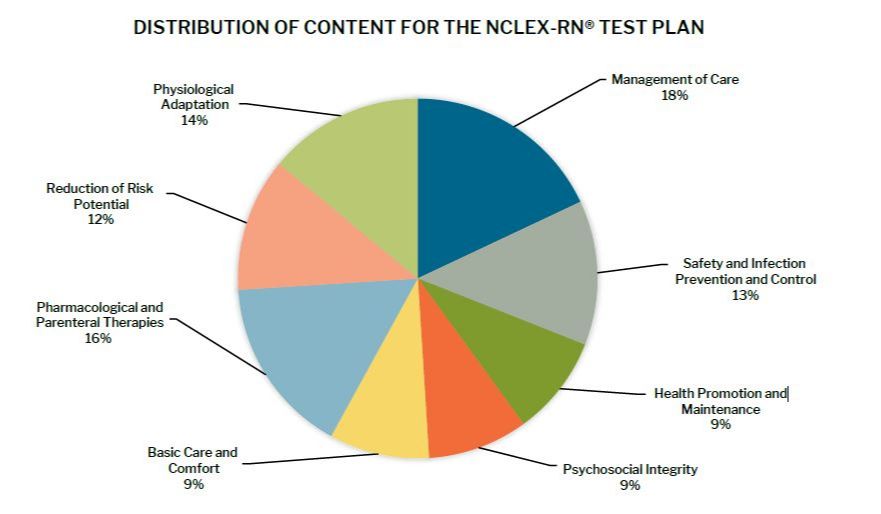
- Determine which NCLEX Client Needs category applies
- Identify what the question is truly testing
Prioritize
What comes first — and why?
NCLEX is fundamentally a test of nursing priorities. The Prioritize step applies evidence-based frameworks — Maslow's Hierarchy, the ABCs (Airway, Breathing, Circulation), safety principles, and the nursing process — to determine which patient need or nursing action must come first. This step eliminates the "all of these seem right" paralysis that causes so many students to fail.
- Apply Maslow's Hierarchy of Needs to clinical scenarios
- Use the ABCs framework for physiological priorities
- Distinguish between immediate and secondary nursing actions
- Recognize when safety overrides all other priorities
Evaluate
Which answer best matches your analysis?
With a clear analysis and a defined priority, you now evaluate each answer option against your framework — not against your gut feeling. The Evaluate step teaches you to eliminate distractors systematically, recognize "almost right" answers, and select the best response with confidence. This is where the A-P-E Method transforms test anxiety into test mastery.
- Eliminate answers that address secondary priorities
- Recognize and reject "almost right" distractors
- Apply the process of elimination with clinical reasoning
- Select the answer that best matches your Analyze + Prioritize work
The A-P-E Method Works — Here's the Proof
Implemented with final-quarter ADN students (NUR 283) in a quasi-experimental, within-subjects pre-post design. Two 2-hour sessions. Statistically significant results.
+10.56 pts
Mean score gain on analysis-level questions
84.6%
Of students improved individually (11 of 13)
83.59% → 94.15%
Pre → Post average score
p = .006
Statistically significant (Wilcoxon signed-rank)
Cohen's d = 0.784
Large effect size
23% → 85%
Students scoring 90%+ on analysis items
SD 11.77 → 5.36
Score variance dropped — more uniform cohort
0 extra hours
No additional curriculum time required
Key finding: The largest gains occurred among the lowest-baseline performers — supporting the premise that struggling students lack an organized reasoning approach more than content knowledge. The A-P-E Method is a low-cost, faculty-deliverable intervention requiring no additional curriculum hours, proprietary platforms, or external tutoring.
Built on Doctoral Research
The A-P-E Method is not a shortcut or a trick. It is a research-validated framework developed through Prof. Darline Riggs' doctoral work in nursing education, focused specifically on the analysis-level questions that the NCLEX uses to determine clinical judgment competency.
As a Test Development Specialist who wrote NCLEX-style questions, Prof. Riggs understands exactly how these questions are constructed — and she built the A-P-E Method to give students the same insider framework that question writers use.
Access the Free NCLEX Overcomer Course →Know What You're Facing
The A-P-E Method is designed to address all 8 NCLEX Client Needs categories.